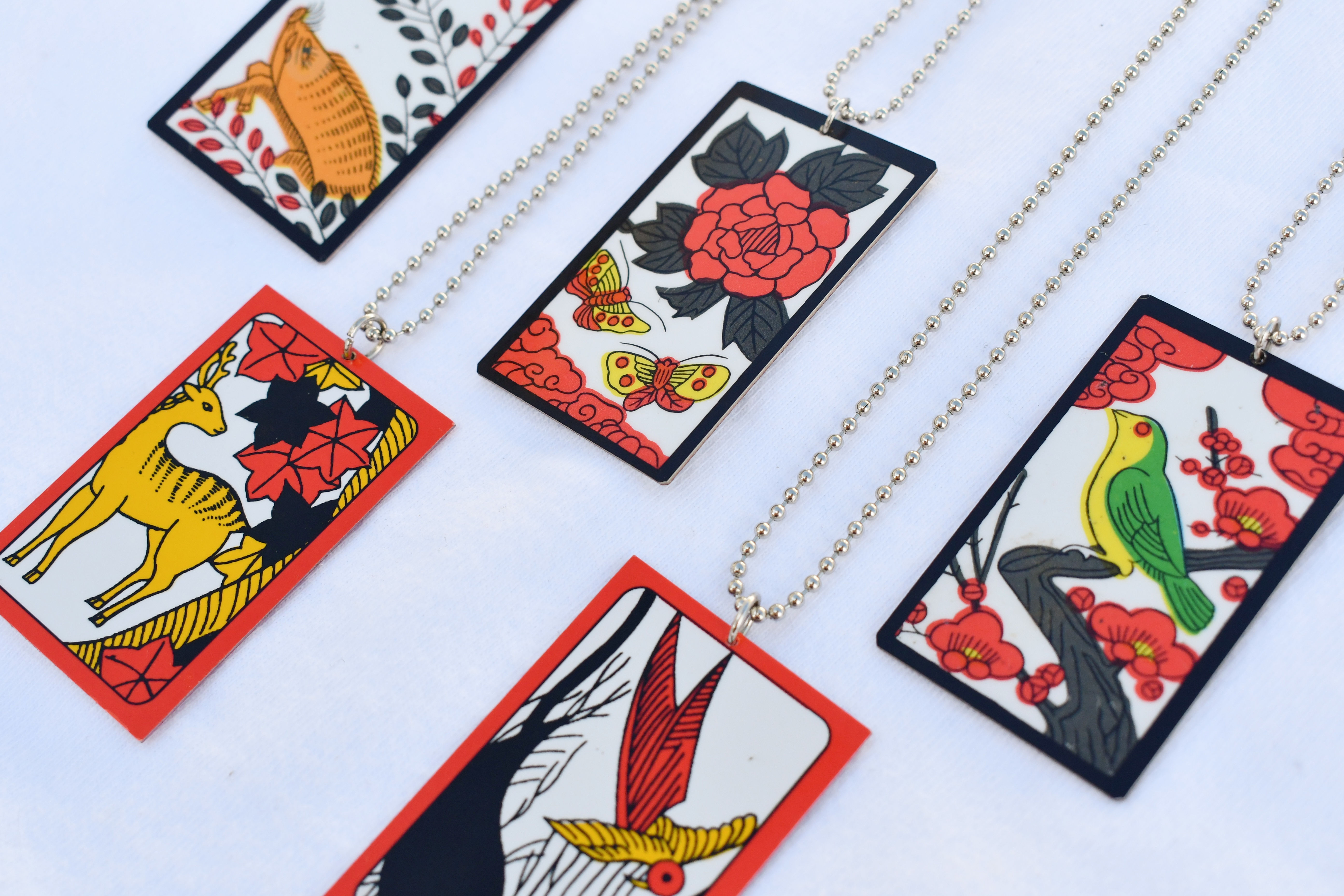

Left to right: Hagi, Kito, Botan, Ame, Ume
July: Shichigatsu: Clover: Hagi
A popular autumnal symbol, often associated with melancholy and unrequited love.
October: Kugatsu: Maple: Kito
Associated with peace and serenity of the world's elements, Japanese maple trees represent balance and practicality and are called "kito" in the Japanese language, which means "calm," "rest" or "at peace."
June: Rokugatsu: Peony: Botan
Known as the 'King of Flowers', the peony is a Japanese flower symbolizing good fortune, bravery, and honour. As with most flowers in Japan, they are often used to convey what can not be spoken.
November: Juichigatsu: Rain: Ame
Represents cleansing and rebirth. It shows becoming new again.
February: Nigatsu: Plum: Ume
Plum blossom is seen as a symbol of winter and a harbinger of spring. Symbolizing perseverance and hope, as well as beauty, purity, Ume represents the transitoriness of life.
Commonplace in every Palauan home, Hanafuda(Hanahuda) is a flower card game brought to the islands by the Japanese during the World Wars that has become engrained in Micronesian culture worldwide. Centered around the seasons, these beautiful cards remind us of our connection to the cycles of the Earth.
May these adornments work in unison with your intentions to feel flow and embrace the beauty within as you navigate the path towards holistic harmony.


